
Ardour has established itself as one of the most powerful and flexible options within the world of open-source digital audio workstations (DAWs). Designed for musicians, sound engineers, and producers seeking a free alternative without sacrificing professional quality, Ardour offers recording, editing, mixing, and mastering tools that compete with those of the most recognized proprietary packages. Its GPL license allows anyone to download, modify, and distribute the software, fostering an active community of developers and users who continuously improve its features.
What is Ardour?
Ardour is a cross-platform digital audio workstation that runs on Linux, macOS, and Windows. Since its initial release in 2005, the project has evolved thanks to the leadership of Paul Davis and the contributions of hundreds of collaborators worldwide. Unlike many commercial DAWs, Ardour imposes no limits on the number of tracks, plugins, or sessions, making it an ideal tool for projects of any scale, from home demos to professional studio productions.
History and Development
The origin of Ardour dates back to the need for a free DAW that could compete with Pro Tools and Logic in audio production environments. Paul Davis, then a graduate student, initiated the project as part of his thesis, focusing on stability and low latency. Over the years, support for VST, AU, and LV2 has been added, integration with JACK for real-time audio routing, and an interface that adapts to both linear and non-linear workflows. Each major release introduces improvements to the audio engine, automation handling, and compatibility with professional audio hardware.
User Interface
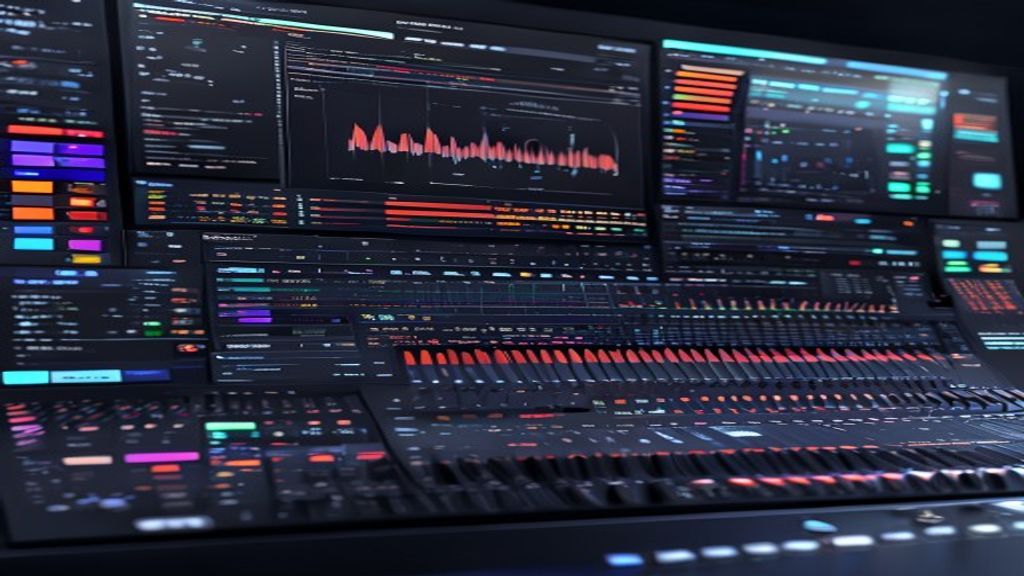
Ardour’s interface combines a traditional mixing view with an editable timeline that allows dragging and dropping audio and MIDI regions. The panels are fully customizable: you can dock the mixer, note editor, region list, and automation panel in any arrangement that suits your workflow. Additionally, the visual theme can be switched between light and dark, and there are options to scale the interface on high-resolution displays, improving usability in studios with multiple monitors.
Key Features
- Unlimited recording of audio and MIDI tracks.
- Non-destructive editing with precise cuts, fades, and crossfades.
- Full automation of track and plugin parameters.
- Support for VST, AU, LV2, and LADSPA plugins.
- Deep integration with JACK for real-time audio and MIDI routing.
- Delay compensation to maintain synchronization.
- Advanced mixing tools: equalizer, compressor, limiter, reverb, and more.
- Export to multiple formats, including WAV, AIFF, FLAC, and OGG.
- Compatibility with MIDI control surfaces and mixing control surfaces (Mackie Control, HUI, etc.).
Workflows and Compatibility
Ardour adapts to various production styles. For musicians working with live bands, the ability to record multiple tracks simultaneously with low latency is essential. For electronic music producers, the robust MIDI environment and piano-roll note editing enable complex arrangements. Mix engineers appreciate the precision of automation and the ability to use external plugins without leaving the environment. Additionally, Ardour can import and export sessions from other DAWs using formats such as AAF and OMF, facilitating collaboration with teams using proprietary solutions.
Community and Support
As an open-source project, Ardour has an active community that offers forums, mailing lists, and IRC channels where users share tips, troubleshoot issues, and propose improvements. The official website provides detailed documentation, video tutorials, and a wiki covering everything from initial installation to advanced mastering techniques. Although official support is primarily community-driven, there are subscription options that fund ongoing development and provide access to test builds and priority bug fixing.
Conclusion
Ardour represents a solid and professional alternative for anyone seeking a powerful DAW without the licensing restrictions of commercial programs. Its combination of stability, flexibility, and a feature set that rivals market leaders makes it suitable for both beginners wanting to learn audio production and professionals needing a reliable tool for demanding projects. If you value open-source freedom and the ability to customize your work environment, Ardour deserves consideration as your next digital audio workstation.
Future Prospects
The Ardour team continues to work on improving the audio engine, with plans to incorporate native support for CLAP-format plugins and enhance integration with touch control surfaces. Additionally, cloud-based collaboration features are being explored that would allow multiple users to work on the same session in real time, further expanding possibilities for remote production and music education.
This post is also available in ESPAÑOL.