
Introduction
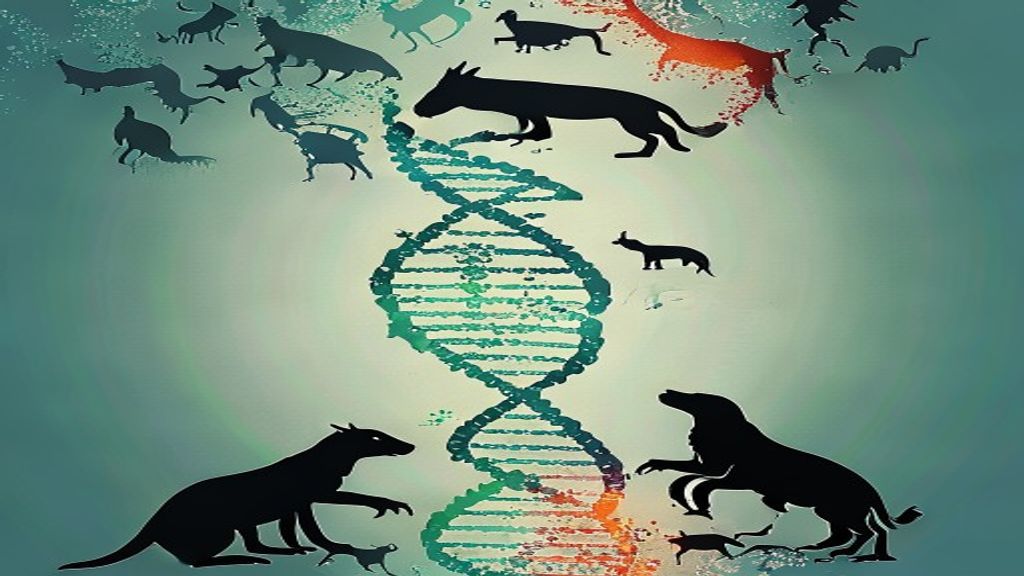
Evolution is the process by which populations of organisms change over generations through modifications in their genetic material. This concept, central to modern biology, explains the diversity of life on Earth and allows us to understand how current species have originated from common ancestors.
Main Mechanisms
The mechanisms that drive evolution are natural selection, genetic drift, gene flow, and mutations. Natural selection favors individuals whose traits confer a reproductive advantage in a given environment. Genetic drift, on the other hand, produces random changes in allele frequencies, especially in small populations. Gene flow occurs when migrant individuals introduce new alleles into a population, while mutations are the ultimate source of genetic variability.
- Natural selection: differential survival and reproduction.
- Genetic drift: random fluctuations.
- Gene flow: exchange between populations.
- Mutations: changes in DNA.
Evidence of Evolution
The evidence supporting evolutionary theory comes from multiple disciplines. The fossil record shows morphological transitions between ancient and modern groups. Comparative anatomy reveals homologous structures that indicate common ancestors. Biogeography explains the distribution of species in relation to geographic barriers and historical events. Finally, molecular biology shares DNA and protein sequences that demonstrate quantifiable kinship relationships.
- Fossils: transition from fish to tetrapods.
- Anatomy: pentadactyl limb in vertebrates.
- Biogeography: marsupials of Australia.
- Molecules: similarity of the hemoglobin gene.
Impact on Society and Culture
Beyond pure biology, the theory of evolution has influenced fields such as medicine, agriculture, and philosophy. In medicine, understanding antibiotic resistance requires viewing it as an evolutionary process. In agriculture, artificial selection has enabled the development of more productive crops and livestock breeds. Philosophically, evolution challenges static views of humanity’s place in nature, fostering an approach based on continuity and change.
- Medicine: drug resistance.
- Agriculture: crop improvement.
- Philosophy: dynamic view of life.
Examples of Evolution Observed in Real Time
Although evolution is often thought of as a process that occurs over millions of years, there are documented cases where significant changes can be observed in just a few generations. A classic example is insect resistance to pesticides, where mosquito and cotton pest populations have developed alleles that confer tolerance to chemical compounds in less than a decade. Another emblematic case is Darwin’s finches on the Galápagos Islands, whose beak size
This post is also available in ESPAÑOL.