
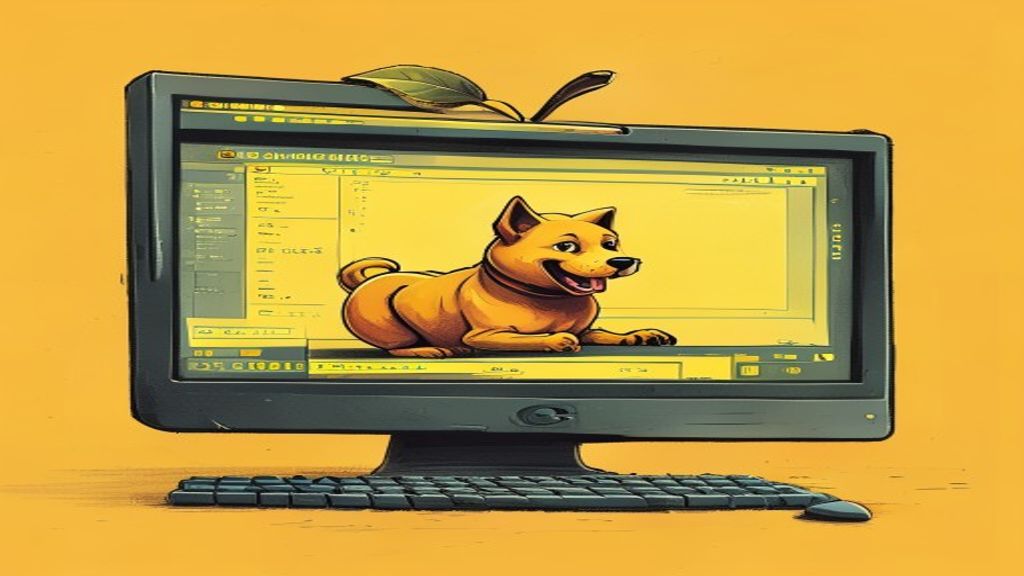
Introduction to Yellow Dog Linux
Yellow Dog Linux (YDL) is a Linux distribution designed specifically for PowerPC architectures, especially targeting Apple equipment such as iMac, Power Mac, and the first servers based on this architecture. It appeared in the early 2000s as a free and open alternative to the proprietary Mac OS operating system, offering users the possibility to leverage PowerPC hardware with an environment entirely based on free software. Since its launch, YDL has stood out for its focus on hardware compatibility, ease of installation, and support for desktop and server environments.
Origins and Development
The project was born in 2001 under Terra Soft Solutions, which wanted to offer a complete Linux solution for PowerPC workstations. It was based on Red Hat Linux, using RPM and yum for package management. Over time it added its own kernel optimized for PowerPC, specific configuration tools, and desktops that transitioned from GNOME to KDE. Development involved volunteers and some hardware engineers who contributed drivers and patches to improve graphics, sound, and peripherals.
Technical Features
Yellow Dog Linux includes a Linux kernel adapted for PowerPC, with support for 32 and 64 bits. It uses RPM and yum to install and update software, accessing a broad repository. It offers desktop environments such as GNOME, KDE, and Xfce, in addition to web servers, databases, and development tools. It includes proprietary and free drivers for ATI and NVIDIA graphics cards, support for FireWire, USB, and Ethernet, and allows creating dual-boot partitions with Mac OS.
Use Cases
Thanks to its focus on PowerPC, Yellow Dog Linux found wide use in graphic design workstations, video editing, and software development for Macintosh platforms. It was also adopted by enthusiasts who wanted to revitalize old iMac and Power Mac machines, giving them a second life as file servers, backup systems, or Linux workstations. In the console realm, YDL was one of the first distributions that allowed installing Linux on the PlayStation 3, leveraging its ability to run other operating systems via the console’s hypervisor. This versatility made it popular among developers and researchers. Furthermore, it was used in scientific research environments requiring parallel processing on PowerPC clusters, and in academic institutions to teach alternative system architectures.
Community and Support
Although it never reached the critical mass of Ubuntu or Fedora, YDL maintained an active community through mailing lists, forums, and IRC. Terra Soft offered commercial versions with paid support, while the community edition remained free. Contributors contributed kernel patches, installer improvements, and documentation. Events and conferences on PowerPC helped share knowledge and resolve compatibility issues with new hardware.
Decline and Legacy
With Apple’s transition to Intel processors in the mid-2000s, the PowerPC hardware market shrank drastically, directly affecting Yellow Dog Linux’s user base. Later releases became less frequent and official support from Terra Soft Solutions diminished. However, YDL’s legacy persists in open-source projects that continue maintaining the PowerPC kernel and in the enthusiast community that still uses the distribution on classic hardware or in embedded systems. Its experience influenced the development of other distributions aimed at non-x86 architectures. Today, projects like Debian PowerPC and retrocomputing communities continue to provide security updates and essential packages, ensuring that the knowledge gained from YDL is not lost.
Comparison with Other Distributions
Compared to generic distributions such as Debian or Fedora, Yellow Dog Linux offered a clear advantage in specific PowerPC support, including graphics drivers and boot tools adapted to Apple’s firmware. While Debian PowerPC required more extensive manual configuration, YDL provided a graphical installer and a more user-friendly post-installation configuration. On the other hand, its package repository was smaller than Fedora’s, limiting the availability of some recent applications. Nevertheless, for users who prioritized hardware compatibility over software variety, YDL remained an attractive option.
Conclusion and Future Outlook
Yellow Dog Linux represents an important chapter in the history of free software for unconventional architectures. Although its active use has declined, it remains a reference for those who wish to explore Linux on classic PowerPC hardware or on console platforms such as the PlayStation 3. The knowledge gained during its development has contributed to improvements in generic PowerPC support within the Linux kernel and has inspired other initiatives seeking to keep legacy architectures alive. In a world where the preservation of old hardware is gaining relevance, YDL may find new niches in education, retrocomputing, and digital preservation projects. Moreover, its focus on open documentation serves as a model for future distributions aiming to serve specialized hardware niches.
This post is also available in ESPAÑOL.