
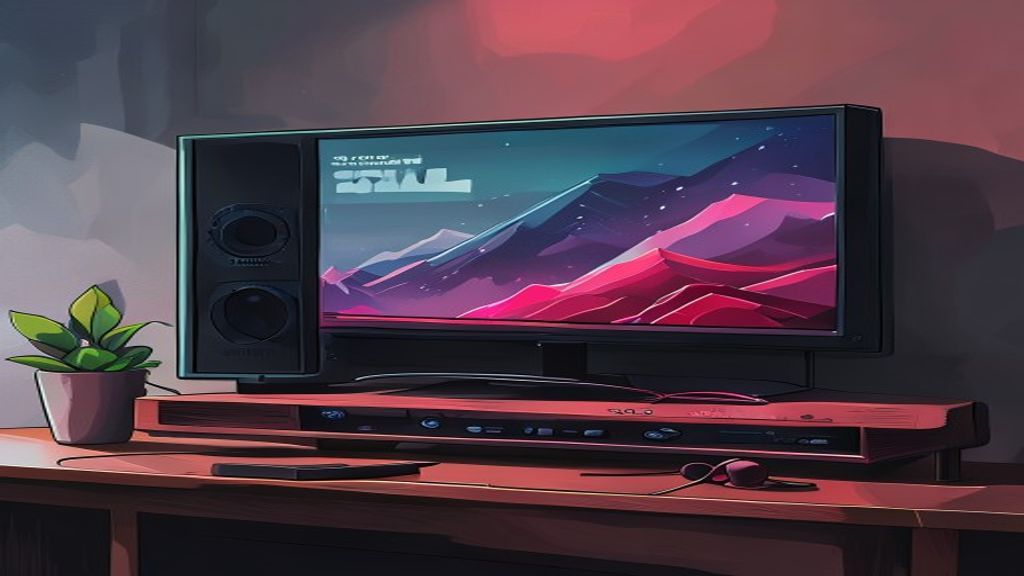
Introduction to GeeXboX
GeeXboX is a lightweight Linux distribution focused on multimedia playback on hardware with limited resources.
Unlike a general-purpose operating system, it removes unnecessary services and prioritizes codecs, players, and video and audio management.
This approach has made it popular for building home media centers, digital signage systems, and embedded test platforms.
What is GeeXboX?
GeeXboX is based on the Linux kernel and uses a very lightweight desktop environment, managed by a window manager such as Openbox or a frontend such as Kodi in its most recent versions.
It includes a preconfigured set of packages ranging from graphics drivers to audio decoding libraries, allowing booting and playback of content without complex adjustments.
History and evolution
The GeeXboX project was born in 2004 in response to the lack of free and lightweight alternatives for media centers on x86 hardware and early ARM boards.
During its early years it focused on creating a bootable ISO image that could be copied to a CD or USB and run without permanent installation, facilitating its use at events and demonstrations.
Over time, improvements in GPU support were added, repositories were updated, and the ability to create custom images using tools such as Buildroot or Yocto was allowed.
Main features
Among its most important features are:
- Architecture compatibility: Supports x86 (32/64 bits) and ARM such as Raspberry Pi, ODROID, and Allwinner boards.
- Integrated multimedia player: Includes VLC, MPlayer, and Kodi, playing MP4, MKV, AVI, FLAC, and AAC.
- Minimalist user interface: By default it uses a lightweight window manager (<50 MB RAM) but can be switched to a more complete interface.
- Live boot: The ISO image is written to USB or SD and executed directly, ideal for quick tests.
- Easy updates: Managed via APT (Debian) or custom repositories, facilitating security patches and new codec versions.
- Low resource consumption: In typical use it occupies less than 200 MB of RAM and little CPU, suitable for low-power devices.
Installation and configuration
To install GeeXboX, download the ISO image corresponding to your architecture from the official site or a trusted repository.
After writing it to a removable medium with dd or Rufus, boot from that medium; the system detects the resolution and launches a wizard to configure language, time zone, and input peripherals.
Use cases
GeeXboX serves in several scenarios thanks to its flexibility and low hardware requirements.
- Home entertainment center: playback of movies, series, and music on TVs or monitors connected to a Raspberry Pi or x86 mini PC.
- High-fidelity systems: use as a lossless audio player on USB DAC or dedicated sound cards, taking advantage of low jitter and reduced consumption.
- Digital signage: presentation of advertising or informational content on screens in stores, airports, or educational institutions, with remote updates via scripts.
- Embedded development platform: test environment for multimedia applications that need direct access to video and audio hardware, facilitating debugging and code optimization.
- Lightweight streaming server: transmission of content on a local network via UPnP or DLNA, without the need for a heavy server.
Comparison with other media center distributions
To position GeeXboX against other options, let’s look at some key differences.
Although alternatives such as LibreELEC, OSMC, and Xbian exist, GeeXboX stands out for its minimal software layer and its ability to run on very old or low-performance hardware.
LibreELEC focuses on Kodi and needs more graphics resources; OSMC offers a more polished experience but consumes more memory; GeeXboX allows choosing between different frontends or dispensing with a graphical interface if only command-line playback is needed.
Community and support
The community and support are important pillars for any distribution.
The GeeXboX community is active in forums, mailing lists, and Git repositories, where patches are shared, bugs are reported, and hardware improvements are proposed.
Although official releases are less frequent, several forks and community versions offer updated images with recent kernels and security packages, keeping the distribution alive for new projects.
Future prospects
The future of GeeXboX is oriented toward leveraging new hardware and update models without losing its lightness.
Work is underway to integrate hardware acceleration technologies such as VA-API and VDPAU, which offload video decoding to the GPU and reduce CPU load.
Also being evaluated are images based on rolling-release distributions such as Arch Linux, which would allow continuous updates without full reinstalls, preserving the project’s characteristic low consumption.
Conclusion
GeeXboX is an attractive option for anyone seeking a free, lightweight operating system focused on multimedia playback without losing Linux flexibility.
Its easy installation, broad architecture support,
This post is also available in ESPAÑOL.